
There were ideas once too large for people to accept. That the earth moves around the sun. That invisible germs can destroy a body. That our little planet is round and not flat. Humanity resisted such truths at first, not because they were false, but because they were greater than the imagination of the age. In time, science gave us tools to observe, test, and accept them.
But there are truths no instrument can fully measure. Some realities are too vast not only to prove, but to exhaust. The love of God is one of them. We may carve “God is love” over our altars. We may sing it, preach it, hear it, read it, and repeat it all our lives. Still, we do not grasp its full width. We confess it more easily than we comprehend it.
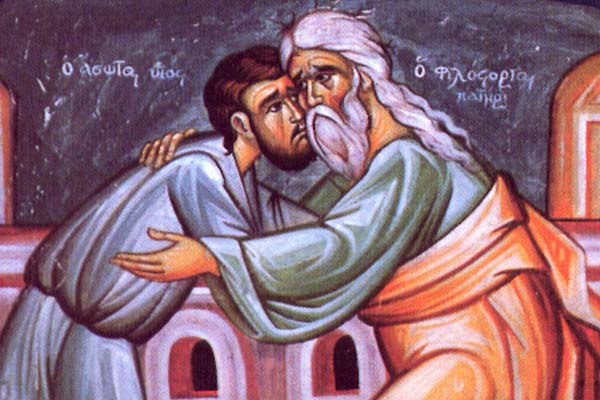
That is why the parable of the prodigal son has the power to shake and shock us every time we hear it.
The father had every earthly reason to question, doubt, and refuse. The son had wounded him deeply. He had asked for the inheritance as though his father were already dead. He broke trust, wasted what was given, disgraced the family, and disappeared into a far country. He did not return out of pure devotion, but out of hunger. He came back with empty hands, with no repayment, no proof of change, no years of restored faithfulness, only a rehearsed speech and a starving body. Any parent, any neighbor, any one of us would say, “Be careful. Test him first. Make him prove himself.”
But the father does not lead with suspicion. He leads with recognition. He sees his son, runs to him, embraces him, restores himThis is the scope of divine love: God knows every reason we think He should keep His distance, and still He comes near.
And this is where the parable enters our lives. We tell ourselves we are not holy enough, not consistent enough, not prayerful enough. We have not given enough time, enough money, enough effort. We come to God distracted, ashamed, tired, anxious, sometimes only because life has collapsed around us. We pray because we are afraid. We return because we are exhausted. We repent with mixed motives. Yet the Father remains who He is.
The world loves with conditions. It stays while you are useful, pleasant, successful, desirable. But God is not a contract. He is Father. And when we fall short, He is not changed. When we come late, He is not changed. When we come wounded, confused, or desperate, He is not changed. He is there still, loving with a greatness we will spend our whole lives receiving, and never fully comprehend.